My mind is far too curious; always rambling from one thing to another and so I cannot dedicate this blog to any one subject. Therefore, I bring you my everything. All writings are subject to change as I see fit. I am always learning and improving, therefore some works are worthy of re-editing and some are simply works I've moved too far beyond.
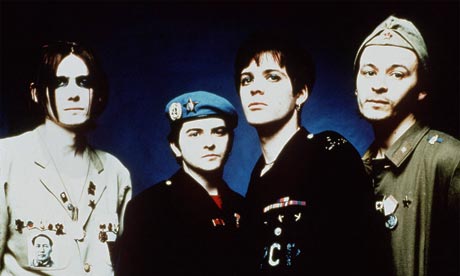
The fifteen year life span of the Psychedelic, Shoegaze Garage Rock collective, Black Rebel Motorcycle Club (BRMC) has been fraught with trials and tribulations that would spell certain doom for nearly any modern group of musicians. Despite all of this, Robert Been, bassist and dual vocalist opposite Peter Hayes, guitarist and equal handed mastermind of the group have delivered consistently impressive albums that have earned them a dedicated fan base across the globe and in doing so, have developed an entire realm of genre bending sounds that keep us guessing with each new release. The rebel duo were out a drummer after nearly ten years of discord with Nick Jago who was distracted with personal difficulties. The beautiful and talented Leah Shapiro has taken up the leather in his stead and her feral drumming instincts bring new ferocity and life to the trio, born anew. It was during touring for their fifth full length release, Beat The Devil's Tattoo, that irreparable tragedy had struck the band. Robert lost his father, Michael Been of the 1980's New Wave Rock group The Call, to a heart attack after a Belgian music festival. He was the acting sound engineer, source of wisdom, inspiration, and more or less a parent figure to Peter who practically grew up beneath the same roof. It was a heavy blow struck to the ribcage of a band that had just picked themselves up off the dirty floor. A three year hiatus ensued. Luckily for the music world, there is nary an earth shattering tragedy that can break the brother-like bond of the two core members. Their pitch rebel spirits colligated stronger than ever before and with their new drummer present to sear their agitated nerves with a mind for constructive ventilation, the trio embarked upon what would manifest as their utmost seasoned, cimmerian and at times savage efforts to date. This operose undertaking would bring to question all of their previous accomplishments, as well as their future aspirations and what, if anything, it would mean to continue on with their music at all. For three years it was a shapeless apparition that refused to take any form, but lingered at their table―ever taunting with questions that couldn't be answered. The album was thusly titled Specter at the Feast.
The first track "Fire Walker" is a moody slow burner that simmers with long-steeped agitation as if wandering cautiously through a house of mirrors. Robert's words are wincing and clinched as if biting the insides of his cheeks until he can taste blood. This sort of bitter dramatic bravura is little-known in BRMC's albums. They've played around with ambience and mantra-esque segues in their self-titled debut album B.R.M.C. and one of my favorites off Baby 81, "666 Conducer," but it wasn't of this ilk. It serves as a very appropriate post-script to their hiatus and a mood-setter for the album. This leads us into their single and all-too-appropriate cover of The Call's hit single of the eighties, "Let The Day Begin" with its manic introductory drumbeat and a sharp dressed nineties British Rock makeover. Been doesn't try for a moment to channel his father's David Byrne-esque vocal style but instead makes the song his own. This leads us into softer, more remote territory with "Returning" and "Lullaby," both markedly toned down for the casual BRMC fan, yet still bearing their unmistakable skull-and-crossbones branding. The beauty of BRMC is that it's like a conjoined twin hood of music. Some may call it imbalanced, others may think of it as bipolar musicianship―I dare say it's simply satisfying all taste buds. The first portion of the album is composed and coordinated largely by Robert. By this point, many faithful are no doubt questioning the album's direction and whether or not they can accept this shadow of the BRMC they once knew, and that is when Peter pours on the gasoline with "Hate The Taste," and in fine, full bannered Rock & Roll form! This is where barn burners come raping and pillaging our eardrums with the grinding Blues-laced barbarism of BRMC-past and not a moment too soon.
The album continues much in the same way. They maintain a balance between hair-raising, riff and whammy infused Fuzz Rock―some of which may even spark hazy memories of Grunge and the unkempt angst that made it so attractive, and then somber works like "Some Kind of Ghost," which will invoke visions of robed congregations slowly wading through murky swamp waters in search of the salvation only sweet southern Gospel can provide. Truly, I cannot think of a solitary band principally attached to the Psychedelic Rock & Roll scene with such a wide scope of sound. This is precisely why music is supposed to be an exciting frontier without cages or limits. Not at all a signed contract standardized by record labels who have the final say in what can and cannot be tolerated. It can't be said that this is their most seamless work to date, but it is an irrefutable shotgun blast into the air announcing that they're intent on sticking around and I couldn't be happier about that. The specter, that which has lingered not just with the passing of Robert's father, but within the shadow of much of the afflictions they've endured for so long, seems to have been cast away at long last. I just sincerely hope we aren't left waiting another three years to see what comes next
Siddhartha - A Trip to Inner Self (Trail Records, 2009)
Siddhartha have created something special for us. They’ve forged the true psychedelic pill that Neil Young attempted in 2012, meant in all purports to transpose us from this chaotic world to the domain of our subconscious mind and whatever transcendental enchantment or terror that may lie within it. It’s a truly bold and bronzy experience—a symphonious expedition that I felt a pinch of hesitancy to dive into. It takes a strong stomach and able mind to endure an album like this from front to back, there can be no denying that, but the end result is very rewarding and you’ll wish you’d have taken the ride a lot sooner. And your first ride will never be your last.
For those unfamiliar, Siddhartha was an influential book written in 1922, published within America in 1951 and is the inspiration for many Buddhist philosophizers in reckoning of transcendence and renunciation (1). It is obvious the artistic intent of this album then; to transport us from one living world to the next. They achieve that with musician’s virtuosity and progressive rock’s paint brush; dabbling in many colors that coat sprawling, mile-long corridors and assembling numerous soundscapes that are minimalistic and maximal, hushed and deafening with a six band member base, not to mention the upward towards five on-and-off guest musicians. The tracks flow seamlessly together in large Rock-orchestral movements, creating a solid sense of cohesion in the journey with minimal interruption or time to reflect until the entire trip has slowed to a halt. The infrequent silences that do fall are curious; hardly ever at track's end, but falling within the lifespan of a ten minute opus and setting a new musical direction. The entire experience encourages one to slow down and (forgive the clichéd expression) smell the roses, for this is a truly unique treat from a band that has very sadly dissolved as of 2001.
Turkey has, to my surprise, been the source of a great score of skilled psychedelic groups throughout the years, but none so coordinated and focused in their intent as what Siddhartha have put on display here. Their album has been greeted with top honors as the "4th edition of Prog Awards album of the year in 2009.” A Trip to Inner Self has been re-issued in a limited collector’s edition as of 2012 (2 ). My advice is to pick it up while it lasts because nothing this good ever lasts for very long.
The Psychic Ills, supported by Föllakzoid and Kinski
March 2nd, 2013
The Psychic Ills have given us One Track Mind in 2013, an album that can be considered fairly more accessible than much of their previous work. That isn't a negative attribute in the least. In fact, on the contrary. I believe this album sheds light on the well rounded adaptablity that the entire band harnesses. There is restraint exercised that sharpens the psychedelic-pointed ambition of their music; it truly must be experienced live to really feel the chilling impact of these new songs they have constructed. That is testament received first hand by yours truly because my first run through One Track Mind was very forgettable at best. The very same day I saw them perform most of the songs ten feet before me and I felt an immediate urgency to return to the album so that the flame their performance sparked would be re-ignited. Now there is no turning back. I listen to it at least once a day in order to preserve my sanity.
Before I divulge too much, allow me to set the stage for that March 2nd evening. There were two opening acts of some renown; Föllakzoid from Chile and Kinski from Seattle, Washington. Two bands with two drastically different approaches and ideas in the vast world of Psychedelic Rock and Roll. Föllakzoid was interstellar, galaxy hopping break-out-the-joints Rock and Roll to the furthest degree that can be defined, while Kinski played a very primordial, brutish, breakneck set that got the crowd worked up more than The Doug Fir Lounge is probably used to with the malaise of their usual soft hearted Indie Rock fare.
Both bands were prime appetizers, but it's always a thrill to watch a lead act take the stage knowing they harness everything you're craving but with seasoned variety, expertise, and the headliner's allotted time to let their music quake their fans' hearts and souls. Their set was a very appropriate blend of their earlier droned out experimentations in sound and the melodically attainable newer works, much of the time passing in and out through one another seamlessly. They pleased old fans and forged new ones, such as the out-of-town Seattle couple my wife met, whom were celebrating their 30th year anniversary with a trip to Portland and a spontaneous show featuring a completely unfamiliar band. Judging by their dancing and the elated faces around the venue it was quite a successful evening. This reviewer approves of any future Psychic Ills endeavor as long as they keep their heads in the right place. Keep on keepin' on!
It's rare that an EP can convey so much experience and depth within a band's potential, but Clann Zú, a collaboration of Australian and Irish musicians steeped in roots of Classical, Punk, Electronica, and very much Progressive Rock, achieved something spectacular with their self-titled EP. Self-released in 2000, the four-piece collective divulged five tracks that exist as organically unique from one another as could be imagined.
The first track, "Of Course It Is" unfolds gently with deeply colorful guitar that washes over you in an oceanic blue haze. It swirls around your ear cavities and blooms with eventually subtle accompaniment from percussion and a whirring violin in a complete three-sixty radius, building in gloriously atmospheric intensity until the crescendo makes your hairs stand on end and you melt into euphory. Nothing is rushed. Everything is allowed to unfold in its own sweet, precious time.
The plethora of instrumentation is key to the epic full bodied nature of this work. The strings are a loving ode to the power and majesty of man's symphonic tradition, which verily has an absolutely necessary role in today's music as is demonstrated. The vocals are multilingual, which lends a mystical, free roaming spirit to the work as if they refuse the boundaries that our powers-that-be have set before us. They are strong and reach Olympian, spine tingling heights, yet maintain a honey coated lacquer that make each verse, every refrain a sugary treat for the ears.
There are nods to numerous walks of worldly influence, Jazz scented percussive bursts, electronic samplings lending a varied facet to their harder leanings that nearly shout Rage Against The Machine, but fueled by Irish injustice and years of bottled angst. The work closes with a call to arms and the sampling of an activist making her denouncement known to the world: "the richest people in the world; there are less than two thousand people that control six billion...This planet belongs to all of us."
As I stated originally, I haven't been moved by five solitary tracks in this way for quite a spell of time. Clann Zú have very sadly disbanded in 2004, but we were left with this, and two full length works. Will they match up? This work was so thoroughly good, I'm actually afraid to find out.
"Music resembles poetry; in each are numerous
graces which no methods teach, and which a master hand alone can reach."
So said Alexander Pope and no truer words could be spoken.
Music is indeed a great deal like poetry. Cast
with the utmost consideration for potency in language, just as the song is as carefully
arranged in expressing what burrows deepest within man's complex and convoluted
soul. It is a form of expression that has been celebrated, praised, and
exercised by the greatest minds in history―an art form that can bear no price.
I happened upon an artist approximately eight
years ago―an experience that changed me forever as a fan of music. I wasn't
looking for anything different. In fact, I was comfortably nesting in a rut of
Classic Rock―I couldn't believe that good music existed outside the glory days
of the sixties and seventies. I was raised on Classic Rock―it was Rock and
Roll's golden age with its perfectly memorable hooks, attitude and age defining
oldies that will forever sit in the back of our collective minds as "that
one song"
I can't say I liked Tyler Jakes’ music right away,
because he didn't simply emulate the Classic Rock genetics I sought. Jakes
absorbed music, vast in difference of time, place, and culture. With a flair
for dramatic production he presented the world as he saw it―or perhaps as he
wished to see it―with a thick Rock & Roll glaze. Within my first few
listens I felt a gnawing conflict in my gut. His music presented sounds that
were fresh, raw, new and above all, dangerous to me. It was almost like being a teenager in the late sixties; Tyler
Jakes was the secret Black Sabbath record I hid from my Catholic parents. My
guilty pleasure.
Tyler Jakes hails from Minneapolis, Minnesota
where he had flirted with numerous Rock bands, all of which couldn't be
bothered to take the music seriously."I was
frustrated," he says, "I really wanted to get somewhere, but none of
the bands I was in were taking it very seriously. I felt like I was wasting my
time, so I quit." Frustrated, Tyler found a gnawing urgency to
escape and take a plunge. "I packed my bags
and moved to Europe. I didn't want to be in a band anymore, I just wanted to
get away from it all and clear my head."
So he ventured off for what was supposed to be
a six week trip. Unbeknownst to Jakes, the surreal charm of life in Europe
would ensnare him completely."I fell in love with it," he recalls, "the people, the
pace of life, the music, thefood...everything. I mainly lived and traveled between the Czech
Republic and Bulgaria. Eastern Europe has become a second home." He would remain there on and off for three
years, ever observant and embracive. "The musicians that influenced me when I was
there were the gypsies and the 'non-professional' musicians of the villages. Every
place I went, someone had a guitar or an accordion or something and we would
all start jamming, singing, and dancing."
During
this time, he wasted no time writing poetry, lyrics, notes, scraps―what have
you."I was writing purely
for the sake of writing. I had no intentions of putting an album out, but I did want to learn to record. So I
picked up a cheap used 4-track and a mic at a swap
meet and I spent a year experimenting with sound. Ihad no idea what I was doing, but I think it turned
out better that way." After
returning to the U.S., he had a working demo, "Lie Awake" that came
together with his experimentation. A friend from Minneapolis sent it into a
local station and it received a great deal of attention. Within a couple weeks,
Jakes received a request from the local record store to stock an album.
When
I got my hands on what would become that first official album, Lo-Fi Matter, I was presented with a
collection of eleven songs that spanned beloved homegrown American genres like
dark, swampy Blues, wayfaring outlaw Folk-Country, Cow Punk, all woven together
with European allusions that interjected modern and timelessly old fashioned
roots. The kickoff is "Lie Awake," which will take you on a bruising
Rock & Roll chainsaw ride, giving a taste of Jakes’ clever tongue and the
devilish smirking lyrics that are ever-steeped in hysteria and neurosis. His
voice alone has been likened to Tom Waits, Marilyn Manson, Peter Murphy, and
even Axl Rose; able to cross from a smoky, gravel-pit vibrato to a banshee's
scream in a matter of seconds.
The
tracks continue, each standing alone individually as a completely unique work.
The album is so diverse that there is no solitary demographic to which it can
be presented. It could very well find a home on ten unique radio stations. The
mantelpiece of the entire album is no doubt "If I Ever Make It Home"
with its rambling bindlestiff spirit. There are works that invoke memories of
eighties-Jesus & Mary Chain noise rock, the fond days of Grunge in its
prime, experimental spoken word No-Wave Punk numbers that, no doubt, take cues
from the agitated beat generation of the seventies and eighties, rambling Gypsy
and Spanish Folk-Punk, and heavy sliding Delta Blues in the masterful
"Mentholated Blues" with its schizo-paranoid lyrics:
I cleanse my memories with
a moist towelette,
Then I smoke a GPC
mentholated cigarette.
I stole some ideas from a
third world war,
But now the police
officer’s at my door.
The
wordplay continues with absolutely striking classic Blues constitution, but
slowed down to an absolutely sinister degree. The
crowning achievement of this entire album has to be its grand finale, "Bring
Me Down" with its outlaw Blues decor, the unforgettable guitar line, and
Jakes’ scathing lyrics:
Well I'm a pendulum swinger on the midnight train.
In the codeine garden I'm a child of the rain.
I'm the voice of another; you don't have to pretend,
'Cause I ain't your brother, and I ain't your friend.
I leave it all up to the judge and jury,
'Cause some get lost and some get found.
I'm going up top without a worry.
There ain't nobody gonna bring me down.
Well everybody get together, you got to love someone,
Like birds of a feather flying into the sun.
That gun wasn't loaded, I tried to explain.
It must have just exploded down memory lane.
The instrumental second half erupts into your
ears, summarizing the entire album and every single one of its influences in a
hellfire of guitar fury and finally, tender Latin strings mark the glorious
exit. He proudly proclaimed later that "this song was recorded with a
Radio Shack microphone and an analog Tascam 4-track. After I was done recording
it, I ate some chicken and mashed potatoes." It's amazing what can be done
with so little. This was the very first track I heard and it set the stage for
everything to come.
His goal was a simple one; stay true to
himself, his trials and life experiences, no matter what. The music would
thence come together effortlessly. When Lo-Fi Matter was officially released in late 2005, Pulse
of the Twin Cities drew comparisons as broad as Bob Dylan and Black Rebel
Motorcycle Club, remarking that Tyler "is intent on laying down some truly
dirty Rock and Roll here...Lo-Fi Matter is a great starting point." Rift Magazine reported that Jakes
"displays great range and talent as a song writer. . . . Somebody get this
man some more canvas!" Later, "Lie Awake", was featured in the
short film "Under The N", with Tyler also performing the film's
score.
Still bitten by the travel bug, Jakes packed
his bags and headed west for Northern California's beautiful coastline and the
eccentricity of San Francisco. It was here that he forged his Bootleggers, a band that was
completely on board with his creative think tank. Here, he could rely on able
musicians to bring about his vision of music for a crowd and in fact, expand on
his sound. They set out to record a new album with harder Rock & Roll
leanings, creating anthemic staples like "Rise," "Off The
Track," and the epic "I Can't Take Anymore." The album is
littered with as much diverse inspiration as Lo-Fi Matter, offering up tints of
sweet Country-Blue brine with "114th Street Devil Woman" and
"Pretty Up Our Love," while keeping a hefty Punkinfluence in the abrasive and unforgiving "Ballad in Plain F"
and "Death Valley Surf Safari."
In 2008, Tyler Jakesreleased the full length LP Rocking Hoarse Calypso to ecstatic live crowds
and delighted critics. Vernon Reid of the Grammy-award winning Living Colour described Jakes
songwriting as being "gritty and witty." With two well received
albums in his repertoire, Tyler Jakes and his Bootleggers commenced upon an
expansive tour of the West Coast during 2008 and 2009.
Soon after his promotional tour, Jakes felt the
urgency to once again purge. He set forth upon his follow up; the prodigious,
ambitiously realized Burning Down The
Underground, which in this listener's opinion, was his crowning achievement
up to that point. Bursting at the seams with genre-defying achievements in
lyric and style, it serves as a glimmering demonstration in the universal
potential of music with a mind for originality and ambition. There isn't a
single track that can be skipped without feeling its absence in the listening
experience. Jakes’ mastery in recording had also come full circle, offering
truly dynamic grit and crunch to his sound.
The diversity between tracks like "Topaz
Satellite," a Molotov cocktail of Rock, and "Color It A Mystery"
with its slow bindle-over-the-shoulder Country shuffle give the album a sense
of epic proportion. "Unleash" gets the party started off right with a
Stonesy blues harp and grungy grind, followed up with the equally as slovenly
"Vibrator." One of the true highlights, "South of Northern
California Girl" is a brilliantly conceived, trumpet-laced acoustic tale
that could have easily found a place in any rambling gypsy's songbook. The song's
facetious conclusion is worth the price of the entire album alone. It's a thing
of beauty and pure joy to witness such clever workmanship in songwriting.
Jakes’ most somber work to date rests in "Nothing To Hide," a Mark
Lanegan-league ballad that is gutturally crushing. The final tracks, "Lazy
Daze" and "Goodnight, Sweet Lady" give the album a sort of
grandiose conclusion in the same vein as The Beatles' White Album; entirely well suited
for a work that covers so much territory. Overall, it's an ode to fine musicianship and
ambition. The album was very well received, picking up airplay on over 150
stations across the U.S. and Canada, charting multiple times in the Top 20.
Tyler is now promoting his latest effort, Evil, set for release on March 5th, 2013. He
has already begun making waves in the top 20 of Alternative and Rock stations,
finding company with the likes of Pulp, Red Hot Chili Peppers, Alice in Chains,
and even Jimi Hendrix's back-from-the-grave chart topper. His first single,
"Out Of It" is a supercharged highway rocker that'll get the blood
boiling with its bone crunching Queens of the Stone Age dulcorate and Foo
Fighters-esque big chorus. Connections with musicians go a long way and Tyler
has plenty of help here; "This Is A Robbery," features the trumpet of
Jason Marks (of Malamanya), blazing like the Pixies scoring a spaghetti western
soundtrack. Minneapolis virtuoso Steve Clarke lends his bari-sax to a Gogol
Bordello meets Morphine surf-punk tune called, "The Wolf." The true
fist-clutchers must rest between "Deathtrain To Amarillo,"
"Blood Money," and "FifthFang"; full of sinister vocals and dark grooves; sickly twisted
tales of being strung out on the road, and associating with unsavory
characters. The finale, "Lucid Dream Epilogue" plays like a
bittersweet memory that pays tender homage to some terrible pain. On its
dissolution the guitar trickles out, licking its chops before its final savage
attack, and then bam! Guitar ferocity that leaves no Rock and Roll junky
without their fix.
Twelve songs deep, Evil covers a whole lot of territory;
seamlessly blending garage rock, heavy blues/punk, and a tinge of dark gypsy
folk that has no doubt come from Jakes’ time spent in Eastern Europe. It is as
delectably varied an album as any of his releases and yet, it stands as his
most cohesive work to date. He does not limit himself what so ever. There are
nods to nearly every artist in the back of Jakes’ constantly gyrating mind with
a flowing lucidity that weaves it all together seamlessly. In addition to the
release of Evil, Jakes has worked tirelessly to bring his uncompromised sound to vinyl
for the very first time. There is no finer reason to invest in a turntable and
sound system than right now. The needle will never feel quite as savaged and
brutalized as when it grinds to the fruit of Jakes' ruthless labor.
With so much to offer and engines running on
all cylinders, the question no doubt still remains: "So what? Why isn't
Jakes involved with a record label by now? Isn't that the first step in producing
music? Why should I give him an ounce of my time?" The answer is quite
simply put―maintaining artistic freedom and integrity. Record labels have much
to offer, and yet over time they can only serve as an anchor that will prevent
unchecked expedition. Tyler Jakes' music is a completely self-operated entity,
which is a massive feat unto its own. After Rocking Hoarse Calypso, he gave this entity a
label. Skulltrax Records is now your source for all things Tyler Jakes, as well as the
beginnings for a collective force of likeminded musicians that are brave enough
to take the same plunge. Great things have very small beginnings.
As Jakes has proven, the craft of song is far
more delicate than is given credit. He does not forsake a moment's fleeting
thought if he thinks it might manifest into something rich. This is precisely
why his songs are so impulsive. They are crafted with utmost care and attention
with a burning drive to experience and depict, just as the greatest artists,
poets, and essayists know; days are not to be spent in vain, but experienced,
shared and portrayed with the tools afforded us. Jakes’ experiences portrayed
through his music broadened my horizons to an infinite degree. His music
instilled a hunger for experience, knowledge, and appreciation. There are few
scholars left in the world that are truly worth their salt. Tyler Jakes is
definitely one of them.
Tyler Jakes' music can all be purchased here. Don't forget to pre-order Evil!
For the past couple of weeks, I've been an incredible wreck juggling steroids, chemo injection, and a ridiculous cold that seems to have been run out of my system finally. But meanwhile, I have been working on a very lengthy piece for my good friend and musician, Tyler Jakes. I hope to get it out there for the world to see and get him some more listening ears with it. So stay tuned!
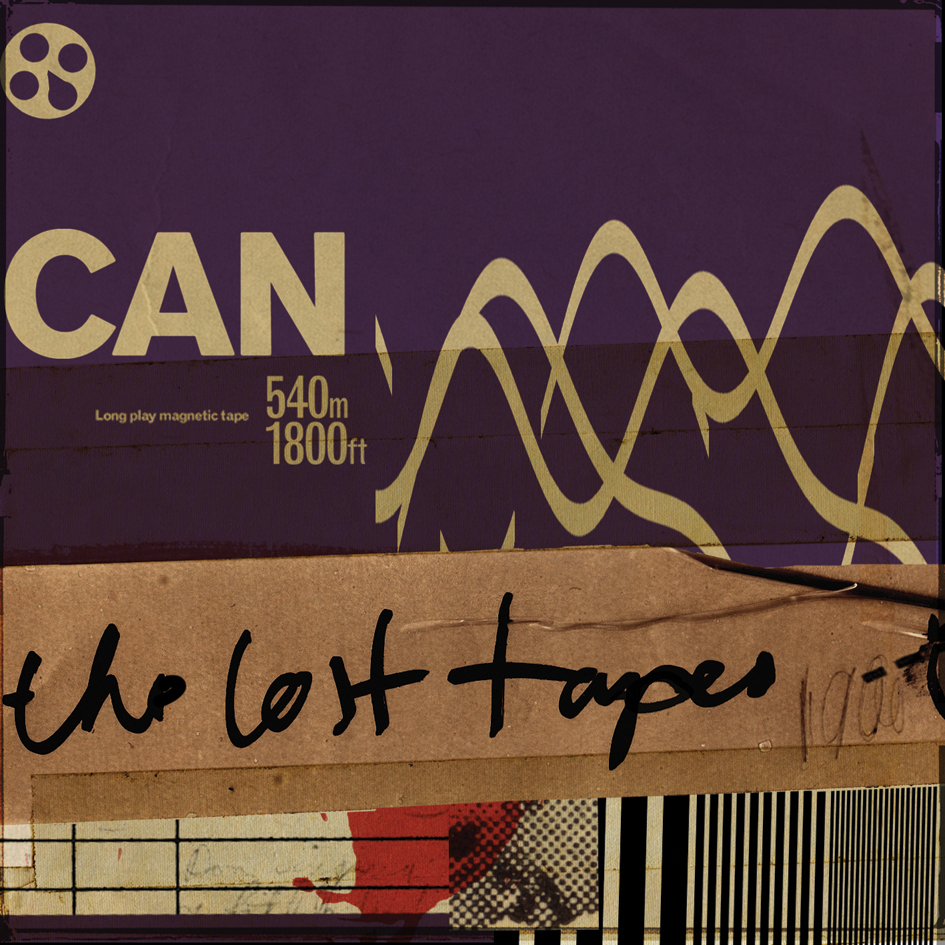
CAN has given us a very rare sort of treat that, as the years stack on, is less and less likely to crop up in the world of music. Their innovative minds elevate this to a cause for celebration, for CAN changed a great deal in the landscape of music in the seventies. They created entire genres of music with single tracks—all of which, were almost entirely composed on impulse and edited down to their signatured complexity and chaotic perfection.
The Lost Tapes are boiled down to thirty tracks spread across three discs, and they showcase every aspect and stage in the evolution of our beloved CAN. From the very first track, "Millionenspiel," and its slow onset of layered sound that erupts into an unconventionally engrossing groove complimented by flute, it is immediately apparent that these aren't just garbled, bootleg quality tracks that sat in a damp basement collecting mold for four decades. We are talking prime studio quality material. This is history. Or rather, a history lesson in the evolution of Rock & Roll. All of their most prominent influences come through, each track standing completely on its own as an example of their heritage. The "Evening All Day" examplifies their fondness for von Beil-esque compositions as far back as 1969, while "True Story" gives the impression that the boys had paid a visit to New York, and sat in on some beat poetry sessions—the electronic drone gives a sense of horror to the whole scenery. The scatter-brained, off the hinges "Deadly Doris" can only suggest that The Beatles' White Album was a fleeting precursor, "Sexy Sadie" being repeated along with the schizophrenic, mantra-like "Deadly, deadly, deadly, deadly, deadly Doris."
Their powers of brilliant impulse shred sixteen minutes into the hypnotic and multi-faceted "Graublau"; when it's through, time is empty and you'll have lost all concept of it. Strange and beautiful tracks like "Dead Pigeon Suite" will give you a feel for their embrace of music from around the world; ethnically diverse instrumentation and sensual, exotic rhythm, but hardly without a ninety-degree shift in tone to keep you on your toes as a responsible listener. As the collection progresses, those familiar with CAN's music will immediately recognize fragments of CAN staples in what were otherwise discarded tracks, offering insight into their creative process. The live tracks included are by no means filler. They showcase classic CAN tracks, given the expansive, time and space defying treatment that vinyl simply couldn't allow them.
The thrill of listening to these lost tapes is, and I cannot stress this enough, the knowledge that you are listening to a group of musicians that are in the budding of their professional career, and every track is an innovation unto itself. It is history. No band dared tread where CAN boisterously frollicked. They were the Nikola Teslas of experimental music; brilliant pioneers, but in the grand scheme they have been criminally outshined by their students.
Rock & Roll
has been riddled with odd, peculiar, and disturbing stories in its 60 year
lifespan. I can think of a few that deserve mentioning, especially the story ofIron
Butterfly’s bassist, Philip Taylor Kramer, whom after departing the band had obtained a degree in aerospace engineering, and was working
under the United States department of defense as well as computer engineering until he disappeared under very mysterious and suspicious circumstances.However, that shall be
saved for another article. One of my favorite stories of the past 20 years is
the creation of the albumThe
Holy Bible.
Initially a quartet, Richey Edwards was the face of
The Manic Street Preachers, and their Clash-esque brand of Punk. After two
albums, the onslaught of attention went to Richey's head and drove him over a
cliff; spiraling downward into a pit of self-destruction, despair, and nihilistic
delusion. It was in his very unstable state of mind that he commenced upon his
dark magnum opus in the form of diary entries made song. Richey held nothing
back in his lyrics—this was his confessional to the world. He had lost all hope and so
therefore, he had nothing to fear, and could not be bothered to exude anything but
his pent-up angst and forlorn fury. The album was
completed and released to critical acclaim, but their performance on Top of the
Pops—Richey in particular, clad in a 'terrorist-style' balaclava—garnered
the show their most complaints ever. Manic Street Preachers disappeared from
the charts very quickly.
Two months after the release of the album, Richey simply vanished.
Oddball sightings were noted but nobody could say where in the world he had
gone to. Furthermore, for a solid two weeks the exact amount of $200 dollars
was withdrawn from his bank account every single day. It eerily correlated with
the lyrics of his song "Yes" regarding prostitution; "for $200
anyone can conceive a God on video." Finally his car was found abandoned
without any clues. The band had set aside a percentage of royalties since his
disappearance, but it wasn't until 2008 that his family had him declared dead.
Richey was eccentric and mentally frayed enough that a disappearance would not
entirely discount a miraculously unexplained reappearance, but sadly, suicide is
the most likely explanation considering his mental state. Anonymous tips regarding his
whereabouts still roll in to this day.
All in all, The Holy Bible is a masterwork of
bleakness and a destitute look at the state of our society. It serves as a lesson to those who step into the darker
realm of humanity; one must possess a wholesome spirit to avoid the path toward
corruption when investigating these borders. It is, regardless, a very
fine work in raw Punk musicianship, even with its morbidly frank, hopeless
and stoic nature.
This is part 1 of a mix that's seen many changes over the past two years. Being a perfectionist, I can't settle until the timing, segue, song placement, and mood is exactly right. This all started as one heavy mix that kept building and building. I was forced to break the initial first mix into two parts, then these two parts grew, developed, and took up a complex life of their own, so I broke both of these parts into two parts. This gives me FOUR mixes, each a kind of chronicling of these past two years. Here is part 1 of The Wrath of God. Timed at about an hour each. Best enjoyed with headphones, minimal interruption, from front to back and altered perceptions. The songs vary vastly in genre and style so there's no real designated audience aside from those who appreciate The Album Experience.
Over the course of the past week, I have been absolutely crushed by the confines of my apartment and the cold front that's slammed the Willamette Valley. So, looking to be productive in some way, I started going through old boxes. There I came across a journal from what must have been six years ago by now. I loved this journal because of the brown leather design; a tree reaching from the ground with twisted gnarly branches. The golden knob and leather-string wrapped around securely have kept my pages relatively fresh and intact after countless moves.
I sat and read page-after-page of random musings that probably seemed like the world to me at the time, but now seem laughable. It all read like some angsty High Schooler's letter of disdain to his ex. As the pages ran on, my writing changed, drastically. I wasn't moping about how alone in the world I was, rather I focused on the how and why of Everything. I was looking for a sense of destiny and purpose but had no idea what to think, what I wanted, and where to look. I was certain of just one thing: I did not want to become just another suit-and-tie in the world. A meager and petty existence that'll surely be forgotten. I knew exactly what I didn't want and I effectively steered clear of it in one fell swoop when I abruptly quit my job at Netflix. I tend to forget how low I've let myself go at some points.
I look at myself now and I realize that all of the fears and questions have already been abolished. I am exactly where I need to be right here, right now. I've a wife that supports, understands, and encourages me in all my fights and endeavors, family that has become enormously closer through my tragedy, and I've come to terms with myself. I have absolutely nothing to worry about. Nothing can be worse than what I'm faced with, which is the greatest question that any being can face and I'm at peace with it. Beyond that, all I can say for myself and all those around me is om mani padme hum.
I woke up with my wife this morning grasping a blind goal: get shit done. It's ridiculous to put that sort of pressure on myself when there's very little resource for me to get said "shit" done with. I say goodbye to Jenny as she leaves for work and with that I let anxiety in. The anxiety that says to me, "you shit! Get off your ass and do something productive!" My heart starts beating faster. I need to keep my mind occupied, so I resort to the news; dumbing myself down to their level of mediocrity and ignorance for an hour before their program is finished. Then, again, I am alone and my mind is wandering with all the things I need to get done but can't, simply because the ball is in somebody else's court. I can do one of three things; listen to KBOO and dink around on the computer for hours; attempt to sit in one place and read or write; or finally, step out into the bitter cold and go somewhere that will provide me with some human interaction, be it the good folks at World Cup, my second family, or some stale customer service interaction elsewhere.
This time, I opted out of all three options and elected a fourth; no coffee, just tea; I sat crosslegged with my back against the sliding glass door—eyes closed. I set my computer to play a mix of Ravi Shankar's Sounds of India and Nusrat Fateh Ali Khan's Shahen-Shah with a pen and notepad. Come what may.
This having nowhere-to-go and nothing-to-do business has got to go. This exercise in calming my nerves is doubtless a very important first step in my day. Slowing down my heartbeat and relieving the mind's sense of emergency. I've only ever worked at my best in a routine. With no routine, there is nothing keeping me in check except my own scrambled mind. I am my own worst enemy when it comes to idleness.
I was reading just this past week "The Art of the Personal Essay," a book of assorted authors and essays assembled by Phillip Lopate. I was struck by a particular section titled "Essays in Idleness", more specifically the selected excerpts by a Japanese author known as Kenko. Idleness in the Japanese sense is related more to random musings and ramblings of the mind, far from the western sense relating to laziness. I hope to reach that point of productivity. I want pages flowing with musings on life's large and small subjects. It calls for discipline that I will have to abide by, absolutely. If Shankar's complex ragas have taught me anything so far, it's following a singular train of thought through to the end, knitting an epical scale idea. I'll get it figured out. Pen in pocket, notepad within reach at all times. I have to. The life of my mind depends on it.
Twenty-seven years of
life and I, a native of the great Pacific Northwest, have already married a
British national, waged war on Federal and State government for my rights, and
am in the midst of a fight against a tumor that lies dormant within my brain. My
question can only be, what comes next? Only, sometimes, I have to stop and
reflect. How the hell did I get here?
On a casual sort of
day, my wife, Jenny and I will come and go along the refurbished ghetto that
was and still is dusty Naito Parkway; walking with hands interlocked firmly.
Passing beneath the rusty crimson steel bridge, we'll almost always stop for a
moment to watch with amusement as the pigeons, in the vacant fenced off lot,
scurry about aimlessly—some pecking, others dirt bathing or simply lounging.
The real kick is watching the horny male pigeons ruffle their neck feathers and
languidly chase down the nearest female for some action. We chuckle, mock and
voice little monologues for the whole scene with "c'mere's!" and
"Imma git chu's!" Next we'll try to spot our two favorite pigeons of
the pack; one pure white and the other an orange cream—a ginger pigeon if you
will. It's a fun little distraction from our walk ahead, but soon we're on
about our business.
The pigeons are hardly
ever disturbed by the busy bridge above, unless it's a serious piece of
machinery or the shrew-like screeching of a train's horn from the adjacent
train yard. They're fairly tolerant birds, but in the rare case they are startled; they'll pick up as a
solitary unit, wind about the lot, and settle within a few feet of where they
stood previous. Very complacent and unambitious creatures, two traits that I
want absolutely no association with.
Ironically, those were
the very two words that most would have used to describe me in my adolescence.
Nobody had an inkling of an idea about the complex inner-workings of my young
mind, but outwardly, I haven't always been the ambitious wayfaring man that my
wife married. I was the awkward soft spoken young man who wouldn’t know the
meaning of a clique if it kicked him in the teeth. My parents, who were more
best friends than a married couple, divorced at a very crucial point in my
life. I had yet to develop any sort of identity for myself. We had all the
luxuries of a middle-class family but with a low class income, and that brought
their frustrations to a twenty-year head.
They eventually split
and like most family destructions, my three siblings and I were assigned a home
beneath our alcoholic mother's turbulent roof. She was hardly able to
hold a job, so we all found our escapes. The house richest in dark, atrocious
memories for me was a two story duplex. Soon upon moving in, the strangling
musk of Seagram's Seven whiskey dominated the household. I came home from
school on a regular basis to find my mother passed out on the couch (having
called into work) with her favorite movie, The
Perfect Storm playing; surround sound shaking the walls we shared with our
neighbor. More often than not she set the movie to repeat so that, when she
awoke from her drunken stupor, she could pick up where she left off. I would
bumble downstairs into my room; my holy sanctuary, always very elaborately
arranged and decorated. No evils permitted. I dreaded what came when she awoke.
I have no room to complain, for I wasn't like most kids. I could have easily
found activities outside of the house like any sane child would do, but I felt,
even as a child, it was my duty to look these evils in the eye on behalf of my three
younger siblings.
My mother is the source
of much inner-turmoil. It is no easy task for me to set my essential nature
aside and assess the entire situation for what it is. I am a peace-maker, and
to stew on the malicious mental bruises she inflicted throughout the years
weighs heavy on my heart. She wasn't always like this; at some point between
buying a house in Gaston, Oregon when the family was still a family and maxing
out our tight finances with a luxury suburban, there grew a void that she
filled with gnarly sour whiskey. She had a very bourgeois mindset along with a
ridiculous sense of self-entitlement—she felt as if the world owed her a grand
scale living, and nothing was ever enough. When she and my father had reached
the limit of where their finances could take them, she got extremely bored. She
used to be such a lovely, fun person to be around; family vhs tapes, hidden
who-knows-where, are the only proof that person ever existed. Her wings had
been clipped, and she was perfectly content in choking down that burning
whiskey in the stead of living a life. And so, it is with grief and a heavy
heart that I must hold fast and protect myself against her. Within the husk of
that woman who bore me is now the mind and temperament of a child; poor,
desperate, alone and angry at the world.
I eventually found
ambition in creative writing with encouragement from my high school teachers;
at one point I actually wanted to be a filmmaker, and the people in my life
always found a caricatured role in my screenplays. It created an alternative
universe where roles could be reassigned; people were shown for how I truly
perceived them. I also took a keen interest in Arthur Conan Doyle's tales of
Sherlock Holmes. I found his masterful powers of observation and deductive
reasoning absolutely fascinating; there was nothing supernatural about it.
"A Scandal in Bohemia" was my favorite. It never grew old.
As time marched on, I
barely skated through high school. I had a paralyzing fear of the real world, living paycheck to paycheck
and on my own. I wanted to keep that reality at bay, but absolutely nothing
could have prepared me for what I consider the worst offense I've suffered at
the hands of my mother. After graduation, we were again living well beyond our
means. It was summer, and I was shamelessly looking into getting on with my
life, escaping my hell and fleeing into dreaded adulthood. There was one
particular humid and uncomfortable afternoon that she hollered for me from
within her dark and musty bedroom. I remember her cocooned within her bed's
comforter—beads of sweat dotting her forehead. The Seagram bottles lined her
dresser; I cursed the seven dollars she always managed to come by as she
slurred, "I need you to start applying for jobs so we can pay rent this
month." I was speechless; I was a prisoner, doomed to provide for a family
I wasn't obligated to provide for. What was I going to say, no? You can all
starve while I hit the road? I couldn't reasonably expect her to stave off her
booze-coma long enough to land a job, and even if she got out there, who would
hire her?
For three years it was my sister and I who provided. My mother destroyed our credit by overdrawing our bank accounts while we barely
paid rent and fed the family. No bank in America will look once at an application from this Nicholas Davis. My hole grew
deeper.
Meanwhile technology
advanced at a blinding rate, and I kept up, formulating a blurring portfolio of
different talents with writings, drawings, digital photo manipulations and so
on. It was my only resource for sanity. The horrors of mediocrity in the real
world could, perhaps, be staved off after all with a little creative juice. I
truly felt a gnawing in my stomach that I could be one to unleash something
wholly epic and unique if my mind was put to the task.
With skills and
interests building upon my shoulders, it was time to focus it on something that
mattered. It wasn't long before I found a passion for music that took me down
stranger and unforeseen roads. My parents were always very much into music of
all sorts, so it was only a matter of time before I took up their love and
continued onward with it. I didn't do much digging, I listened more to time
tested classics that were played to no end on the radio, and artists I
recognized from my youth. Soon I was wrangled within a time warp, thinking I
was born in the wrong decade.
I found a niche, but it
wasn't my niche. The sixties and
seventies were long gone and I needed something fresh. I decided to take a
gamble, and this gamble would change my life as I knew it, forever. I visited a
record store and began browsing. It was such a massive and intimidating arena
that I found myself at the listening station with eight preloaded albums by new
and upcoming artists. The one that caught my eye had absolutely no cover art at
all—just simple black with the band's name Black
Rebel Motorcycle Club and the album's name "Howl." Intrigued, I
put the headphones on and hit play.
What greeted my ears
was something that sounded wholesome and important, almost revolutionary and
yet, simple. Merely a band paying homage to the roots music of America; good
boot stomping country, heartbreaking blues, moving gospel, socio-political
protest—I was bewitched. It was absolutely the greatest find of my life, or at
least the most important. From that point, on my interest in music wasn't
casual but all embracing. It consumed every sense and wrung it dry. Finally, a
healthy focus that could provide potential for work in a field that wasn't
run-of-the-mill. My nature shifted. I hunted, gathered, shared—used my hunger
to spread the word in a massive way. I was famished. It was high time to live
the life I knew I was capable of living.
At long last, there
came a point where I just stopped going home. It was a big world that I hadn't
even begun to chisel into, and I felt from that point on, each step was a new
step down an exciting avenue I hadn't explored. Any direction could change my
life at this point, as long as it wasn't the one I had been stalling in for so
long.
As I continued on with
my writing and networking, it brought me to a site many still know as
"Myspace." "Black Rebel Motorcycle Club" had a page that I
felt it necessary to comment on. This is what introduced me to my
wife—separated by forty-eight hundred miles and two vastly different
governments but united by one spectacular band over the internet.
It's astonishing how
massive and marvelous things have such small beginnings. Swapping little
comments, back-and-forth and trading songs evolved to letters and mix cds—soon
we were utterly inseparable friends united in arms and finally married;
completely content with one another. We both felt awkward in telling anyone how
we met, but it was simply the way of the world now, no fear necessary. It was
clear to everyone that she and I are one and the same. She was my Irene Adler;
"The Woman."
We moved north to Port
Townsend, Washington, a small peninsula town surrounded by the lushest
rainforests of the Pacific Northwest. We both felt beaten down by life in similar
ways, so a fresh start was in order. Port Townsend reminded Jenny of Wales just
enough in that she wouldn’t be overcome with homesickness. I was overcome with
joy on a daily basis, living in what seemed to me a bohemian paradise. The
faces that greeted us were always happy, full of life; hardly ever without a
greeting. Life was, however, very tight, but we managed—barely.
One particular day,
about six months into our marriage, Jenny and I were walking along the
peninsula shoreline. As we attacked one another with the “sea penises”
(seaweed) that littered the shore, she confessed to me her concern about my
drinking, or more to the point, she warned "If you become an alcoholic
I'll cut your balls off and feed them to the cats!"; it sent chills down my
spine, but I realized how easily that line could be crossed. During the rest of
that walk my legs were the weight of cinder blocks. I can't say for sure how I
managed to carry myself along. I observed the seagulls gliding against the
breeze, weightless with no direction, and realized just how easily my life
could be crushed into a million pieces. Her warning has echoed throughout my
skull with every sip of alcohol I've had since, which has been in great
moderation.
Meanwhile, we sweated
bullets trying to secure Jenny proper citizenship, but our government just
doesn't work the way we citizens think it does. It's not enough to be married
anymore—the Patriot Act turned America's immigration policies into a repugnant malformation of our founding fathers' vision for this country. She was forced to return home. Saying goodbye was the hardest thing I
have ever done; the sight of an airport was and will forever remain a reminder
of that sorrow. We still have nightmares of being separated after more than a year of struggles, which had only just begun. Little did we know how relentlessly our love and friendship would be tried...
Leaving the Seattle
airport, my mission was to secure a passport. We formulated a game plan before
she left—either she would try to obtain citizenship for America or, much more
preferred, I abandon the states and flee to Wales. I applied two separate
times, but was denied on grounds that I didn't have enough proof of identity. I
included every single piece of identity the average citizen would need, but it
seemed that my mother's handiwork had clipped my wings by mere association.
With strange turns came
stranger tidings. While Jenny was away for nobody could say how long, I fell
victim to Glioblastoma-Multiforme, a brain tumor. Brain surgery is very
dangerous territory because, like the infinite expanse of the universe, the
brain is a mystery we are still tapping into. It took two weeks to receive an
official prognosis, and it was bleak; the bulk of the tumor itself was removed
but what remained were tentacles reaching into my brain's motor functions. It
was like my own personal Cthulhu, lying dormant within my skull and waiting to
unleash certain doom upon my me.
I look back now, and
the question of fear and thoughts of my own mortality was, to be absolutely
honest, the very least of my worries. Something like this would send most
straight to the grave with fear and self-pity, but leaving my wife of one year
a widow in minute twenty-four years of life simply was not an option. If not to
survive for myself, then it was for her.
While I underwent chemo-therapy
and radiation those around me commenced upon a heavy campaign to bring Jenny
back to the United States. She was refused a Visa to return based upon the
grounds that her first stay was too long. Never mind that she returned home
solely to rectify that situation. Our basic human rights were being raped and
pillaged, and The People took notice. It involved both senators of Oregon, two
television networks, an online petition (which garnered twenty-five hundred
signatures) and several fundraisers. It was all more support than I'd have ever
imagined receiving, a tough pill to swallow being that, by nature, I've always
preferred to live self-sufficiently and help is hard for me to accept.
Regardless, Jenny was the mission, and the fight which could have lasted ten
years given some case histories was resolved within six months.
My wife was free to
return, and our uphill battle toward normality commenced. We continue to tackle
obstacles thrown at us by the government and all of its tangled red tape, but we
wade through it. It's all mind over matter and making an everyday, conscious
effort to live furiously. My most recent victory was receiving my passport,
after three years of fighting and countless hundreds of dollars spent
reapplying. The interesting facet of this is how it's affected my ambition to
live large. It's not that it killed any desire to move up in the world; rather
my ambition isn't foaming at the mouth like a rabid dog. I believe that my
parents threw their arms up too quickly and accepted life as it was, without
ambition or aspiration higher than owning an SUV for beach trips. I am not
going to live life on a 300 mile leash, pinned to Portland, Oregon. My wife has
family in Wales, and by that account I have new
family in Wales that I'm happily obligated to meet. I look forward to jumping
out of my comfort zone.
My voice is unashamedly
meek. It is why I hold such an awesome reverence for writing, and to a much
larger degree, an enchantment with the potential of the mind and language,
along with all things curious and worth making remark. As long as my brain
remains adept, I think I am perfectly okay with developing my passions and
living an otherwise quiet and passive existence with my wife. We'll keep
walking past our pigeons, quietly chuckling. We recently noticed the white and
ginger pigeons have moved on. They will be missed.